
Update Gimp to version 3.2.6
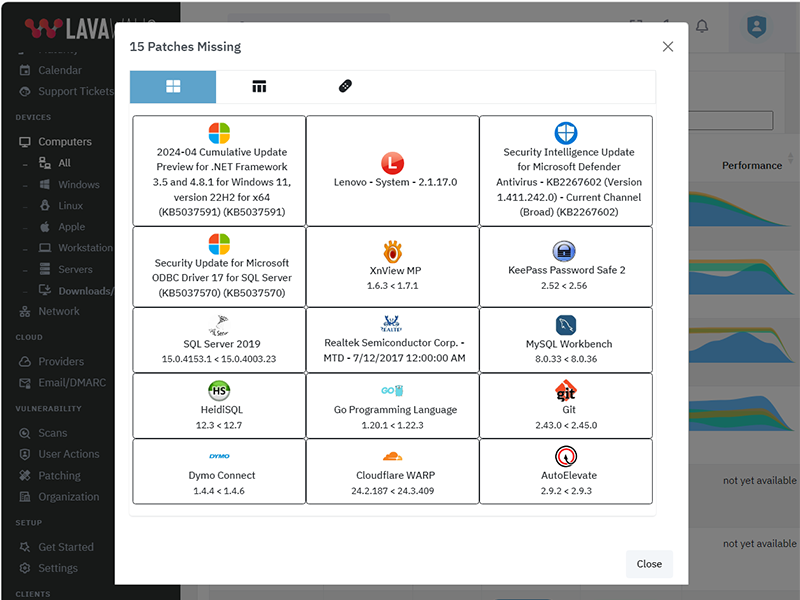
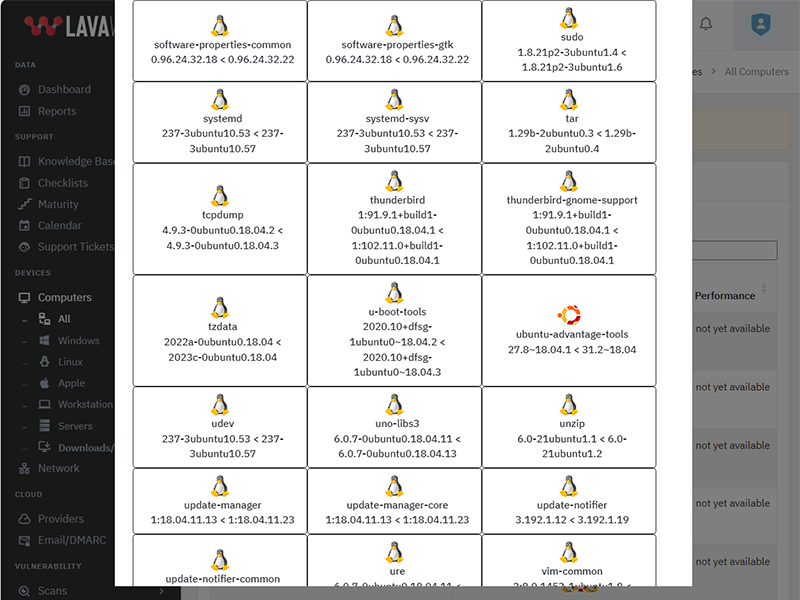
What patches are you missing?
CVE Vulnerabilities for Gimp
| CVE | Published | Severity | Details | Exploitability | Impact | Vector |
| CVE‑2026‑6695 | 2026‑08‑03 06:16:41 | MEDIUM (6) | A flaw was found in GIMP. A remote attacker could exploit this by tricking a user into opening a specially crafted PAA (Paint Shop Pro Array) image file. This vulnerability, a heap-based out-of-bounds write in the decode_lzss() function of the PAA file format plugin, allows data to be written beyond the intended memory buffer. This could lead to heap metadata corruption and potentially enable the attacker to execute arbitrary code on the affected system. | 2 | 4 | LOCAL |
| CVE‑2026‑66759 | 2026‑07‑27 19:17:24 | HIGH (7) | A flaw was found in the file-icns plugin in GIMP. When applying a decompressed mask during ICNS image processing, the plugin reads from the mask data buffer without verifying if the cursor exceeds the allocated resource size. If a crafted file contains a truncated mask resource, the icns_decompress function continues reading past the bounds of the buffer. This out-of-bounds read vulnerability results in information disclosure of heap contents, where memory contents are leaked as alpha channel pixel values, or a crash leading to a denial of service if unmapped memory is accessed. | 2 | 5 | LOCAL |
| CVE‑2026‑66758 | 2026‑07‑27 19:17:24 | HIGH (8) | A flaw was found in the file-fits plugin in GIMP. When processing a FITS image file, the plugin calculates memory allocation sizes using signed 32-bit integers for width and height. If a crafted file sets both values to large values, their product exceeds 2^31 and overflows, resulting in an undersized heap-based buffer allocation. This integer overflow issue results in a heap-based buffer overflow when cfitsio subsequently writes a full row of pixels in the buffer, causing memory corruption, potentially leading to arbitrary code execution or a denial of service. | 2 | 6 | LOCAL |
| CVE‑2026‑66757 | 2026‑07‑27 19:17:23 | MEDIUM (6) | A flaw was found in the file-sgi plugin in GIMP. When processing an RLE-compressed SGI image, the plugin allocates memory for a row table. The image header dimensions (ysize and zsize) are read as 16-bit unsigned integers. If a crafted file sets both dimensions to their maximum value (65535), the multiplication ysize * zsize overflows the standard 32-bit int boundary before being passed to calloc. This integer overflow issue results in undefined behavior, aborting the plugin and causing a denial of service. | 2 | 4 | LOCAL |
| CVE‑2026‑6384 | 2026‑04‑15 20:16:44 | HIGH (7) | A flaw was found in gimp. This buffer overflow vulnerability in the GIF image loading component's `ReadJeffsImage` function allows an attacker to write beyond an allocated buffer by processing a specially crafted GIF file. This can lead to a denial of service or potentially arbitrary code execution. | 1 | 6 | LOCAL |
| CVE‑2026‑59091 | 2026‑08‑10 19:17:30 | HIGH (7) | A flaw was found in GIMP's file format plugins, including those for PSD and PAA files. A remote attacker could exploit these vulnerabilities by tricking a user into opening a specially crafted image file. This could lead to unexpected application behavior or other potential security impacts without requiring further user interaction. | 1 | 6 | LOCAL |
| CVE‑2026‑59090 | 2026‑08‑10 13:19:52 | HIGH (8) | A flaw was found in GIMP's PSD file format plugin. This vulnerability, an unsigned integer underflow in the `block_rem` variable, occurs when a user opens a specially crafted `.psd` image file. The underflow leads to parser confusion, enabling an attacker to inject arbitrary data as layer resource blocks. This can ultimately result in arbitrary code execution, allowing the attacker to run malicious code on the victim's system. | 2 | 6 | NETWORK |
| CVE‑2026‑59089 | 2026‑07‑06 20:16:38 | MEDIUM (6) | A flaw was found in GIMP. The PlayStation TIM loader, responsible for handling PlayStation image files, incorrectly calculates the size of the Color Look-Up Table (CLUT) due to an integer overflow. This occurs when multiplying num_colors and num_cluts, both 16-bit unsigned short integers, resulting in a value exceeding the maximum integer limit. An attacker could exploit this by providing a specially crafted image file, leading to undefined behavior and causing the GIMP plug-in to abort, effectively resulting in a denial of service. | 2 | 4 | LOCAL |
| CVE‑2026‑59088 | 2026‑08‑10 12:17:20 | MEDIUM (6) | A flaw was found in GIMP. A signed integer overflow vulnerability exists in the `file-fli` plugin when processing FLI image files. This occurs due to an incorrect calculation during memory allocation for image buffers, where the multiplication of image width and height can exceed the maximum integer value. A remote attacker could exploit this by tricking a user into opening a specially crafted FLI file, leading to the application crashing and resulting in a denial of service. | 2 | 4 | LOCAL |
| CVE‑2026‑59087 | 2026‑08‑10 11:17:27 | HIGH (8) | A flaw was found in the GIMP image manipulation program, specifically within its Seattle Filmworks file loader. A remote attacker could exploit this vulnerability by tricking a user into opening a specially crafted Seattle Filmworks file. This could lead to a heap overflow, allowing the attacker to write several kilobytes of controlled data beyond the intended memory buffer. Such an overflow can result in memory corruption, potentially leading to arbitrary code execution or a denial of service. | 2 | 6 | LOCAL |
| CVE‑2026‑58384 | 2026‑07‑07 09:16:30 | HIGH (7) | A flaw was found in GIMP's PSD parser. An integer overflow in read_RLE_channel() can cause an undersized heap allocation for the RLE row-length table, after which subsequent per-row writes corrupt heap memory. This could lead to memory corruption, potentially resulting in denial of service or arbitrary code execution. | 1 | 6 | LOCAL |
| CVE‑2026‑58380 | 2026‑07‑06 15:16:40 | HIGH (7) | A flaw was found in GIMP's PNM file format parser. When parsing a specially crafted PNM file, the pnmscanner_gettoken() function writes a null terminator one byte past the end of a stack-allocated buffer due to an off-by-one error in the loop boundary check. This could lead to memory corruption, potentially resulting in denial of service or arbitrary code execution. | 1 | 6 | LOCAL |
| CVE‑2026‑4887 | 2026‑03‑26 13:16:31 | MEDIUM (6) | A flaw was found in GIMP. This issue is a heap buffer over-read in GIMP PCX file loader due to an off-by-one error. A remote attacker could exploit this by convincing a user to open a specially crafted PCX image. Successful exploitation could lead to out-of-bounds memory disclosure and a possible application crash, resulting in a Denial of Service (DoS). | 2 | 4 | LOCAL |
| CVE‑2026‑4154 | 2026‑04‑11 01:16:17 | HIGH (8) | GIMP XPM File Parsing Integer Overflow Remote Code Execution Vulnerability. This vulnerability allows remote attackers to execute arbitrary code on affected installations of GIMP. User interaction is required to exploit this vulnerability in that the target must visit a malicious page or open a malicious file. The specific flaw exists within the parsing of XPM files. The issue results from the lack of proper validation of user-supplied data, which can result in an integer overflow before allocating a buffer. An attacker can leverage this vulnerability to execute code in the context of the current process. Was ZDI-CAN-28901. | 2 | 6 | LOCAL |
| CVE‑2026‑4153 | 2026‑04‑11 01:16:17 | HIGH (8) | GIMP PSP File Parsing Heap-based Buffer Overflow Remote Code Execution Vulnerability. This vulnerability allows remote attackers to execute arbitrary code on affected installations of GIMP. User interaction is required to exploit this vulnerability in that the target must visit a malicious page or open a malicious file. The specific flaw exists within the parsing of PSP files. The issue results from the lack of proper validation of the length of user-supplied data prior to copying it to a heap-based buffer. An attacker can leverage this vulnerability to execute code in the context of the current process. Was ZDI-CAN-28874. | 2 | 6 | LOCAL |
| CVE‑2026‑4152 | 2026‑04‑11 01:16:17 | HIGH (8) | GIMP JP2 File Parsing Heap-based Buffer Overflow Remote Code Execution Vulnerability. This vulnerability allows remote attackers to execute arbitrary code on affected installations of GIMP. User interaction is required to exploit this vulnerability in that the target must visit a malicious page or open a malicious file. The specific flaw exists within the parsing of JP2 files. The issue results from the lack of proper validation of the length of user-supplied data prior to copying it to a heap-based buffer. An attacker can leverage this vulnerability to execute code in the context of the current process. Was ZDI-CAN-28863. | 2 | 6 | LOCAL |
| CVE‑2026‑4151 | 2026‑04‑11 01:16:17 | HIGH (8) | GIMP ANI File Parsing Integer Overflow Remote Code Execution Vulnerability. This vulnerability allows remote attackers to execute arbitrary code on affected installations of GIMP. User interaction is required to exploit this vulnerability in that the target must visit a malicious page or open a malicious file. The specific flaw exists within the parsing of ANI files. The issue results from the lack of proper validation of user-supplied data, which can result in an integer overflow before allocating a buffer. An attacker can leverage this vulnerability to execute code in the context of the current process. Was ZDI-CAN-28813. | 2 | 6 | LOCAL |
| CVE‑2026‑4150 | 2026‑04‑11 01:16:17 | HIGH (8) | GIMP PSD File Parsing Integer Overflow Remote Code Execution Vulnerability. This vulnerability allows remote attackers to execute arbitrary code on affected installations of GIMP. User interaction is required to exploit this vulnerability in that the target must visit a malicious page or open a malicious file. The specific flaw exists within the parsing of PSD files. The issue results from the lack of proper validation of user-supplied data, which can result in an integer overflow before allocating a buffer. An attacker can leverage this vulnerability to execute code in the context of the current process. Was ZDI-CAN-28807. | 2 | 6 | LOCAL |
| CVE‑2026‑40919 | 2026‑04‑15 20:16:37 | MEDIUM (6) | A flaw was found in GIMP. This vulnerability, a buffer overflow in the `file-seattle-filmworks` plugin, can be exploited when a user opens a specially crafted Seattle Filmworks file. A remote attacker could leverage this to cause a denial of service (DoS), leading to the plugin crashing and potentially impacting the stability of the GIMP application. | 2 | 4 | LOCAL |
| CVE‑2026‑40918 | 2026‑04‑15 20:16:37 | MEDIUM (6) | A flaw was found in GIMP. Processing a specially crafted PVR image file with large dimensions can lead to a denial of service (DoS). This occurs due to a stack-based buffer overflow and an out-of-bounds read in the PVR image loader, causing the application to crash. Systems that process untrusted PVR image files are affected. | 2 | 4 | LOCAL |
| CVE‑2026‑40917 | 2026‑04‑15 20:16:37 | MEDIUM (5) | A flaw was found in GIMP. This vulnerability, a heap buffer over-read in the `icns_slurp()` function, occurs when processing specially crafted ICNS image files. An attacker could provide a malicious ICNS file, potentially leading to application crashes or information disclosure on systems that process such files. | 1 | 4 | LOCAL |
| CVE‑2026‑40916 | 2026‑04‑15 20:16:37 | MEDIUM (5) | A flaw was found in GIMP. A stack buffer overflow vulnerability in the TIM image loader's 4BPP decoding path allows a local user to cause a Denial of Service (DoS). By opening a specially crafted TIM image file, the application crashes due to an unconditional overflow when writing to a variable-length array. | 1 | 4 | LOCAL |
| CVE‑2026‑40915 | 2026‑04‑15 20:16:37 | MEDIUM (6) | A flaw was found in GIMP. A remote attacker could exploit an integer overflow vulnerability in the FITS image loader by providing a specially crafted FITS file. This integer overflow leads to a zero-byte memory allocation, which is then subjected to a heap buffer overflow when processing pixel data. Successful exploitation could result in a denial of service (DoS) or potentially arbitrary code execution. | 2 | 4 | LOCAL |
| CVE‑2026‑2272 | 2026‑03‑26 21:17:05 | MEDIUM (4) | A flaw was found in GIMP. An integer overflow vulnerability exists when processing ICO image files, specifically in the `ico_read_info` and `ico_read_icon` functions. This issue arises because a size calculation for image buffers can wrap around due to a 32-bit integer evaluation, allowing oversized image headers to bypass security checks. A remote attacker could exploit this by providing a specially crafted ICO file, leading to a buffer overflow and memory corruption, which may result in an application level denial of service. | 3 | 1 | NETWORK |
| CVE‑2026‑2271 | 2026‑03‑26 21:17:05 | LOW (3) | A flaw was found in GIMP's PSP (Paint Shop Pro) file parser. A remote attacker could exploit an integer overflow vulnerability in the read_creator_block() function by providing a specially crafted PSP image file. This vulnerability occurs when a 32-bit length value from the file is used for memory allocation without proper validation, leading to a heap overflow and an out-of-bounds write. Successful exploitation could result in an application level denial of service. | 2 | 1 | LOCAL |
| CVE‑2026‑2239 | 2026‑03‑26 21:17:04 | LOW (3) | A flaw was found in GIMP. Heap-buffer-overflow vulnerability exists in the fread_pascal_string function when processing a specially crafted PSD (Photoshop Document) file. This occurs because the buffer allocated for a Pascal string is not properly null-terminated, leading to an out-of-bounds read when strlen() is subsequently called. Successfully exploiting this vulnerability can cause the application to crash, resulting in an application level Denial of Service. | 1 | 1 | LOCAL |
| CVE‑2026‑2050 | 2026‑06‑24 22:16:46 | HIGH (8) | GIMP HDR File Parsing Heap-based Buffer Overflow Remote Code Execution Vulnerability. This vulnerability allows remote attackers to execute arbitrary code on affected installations of GIMP. User interaction is required to exploit this vulnerability in that the target must visit a malicious page or open a malicious file. The specific flaw exists within the parsing of HDR files. The issue results from the lack of proper validation of the length of user-supplied data prior to copying it to a heap-based buffer. An attacker can leverage this vulnerability to execute code in the context of the current process. Was ZDI-CAN-28266. | 2 | 6 | LOCAL |
| CVE‑2026‑2048 | 2026‑02‑20 23:16:05 | HIGH (8) | GIMP XWD File Parsing Out-Of-Bounds Write Remote Code Execution Vulnerability. This vulnerability allows remote attackers to execute arbitrary code on affected installations of GIMP. User interaction is required to exploit this vulnerability in that the target must visit a malicious page or open a malicious file. The specific flaw exists within the parsing of XWD files. The issue results from the lack of proper validation of user-supplied data, which can result in a write past the end of an allocated buffer. An attacker can leverage this vulnerability to execute code in the context of the current process. Was ZDI-CAN-28591. | 2 | 6 | LOCAL |
| CVE‑2026‑2047 | 2026‑02‑20 23:16:05 | HIGH (8) | GIMP ICNS File Parsing Heap-based Buffer Overflow Remote Code Execution Vulnerability. This vulnerability allows remote attackers to execute arbitrary code on affected installations of GIMP. User interaction is required to exploit this vulnerability in that the target must visit a malicious page or open a malicious file. The specific flaw exists within the parsing of ICNS files. The issue results from the lack of proper validation of the length of user-supplied data prior to copying it to a heap-based buffer. An attacker can leverage this vulnerability to execute code in the context of the current process. Was ZDI-CAN-28530. | 2 | 6 | LOCAL |
| CVE‑2026‑2045 | 2026‑02‑20 23:16:05 | HIGH (8) | GIMP XWD File Parsing Out-Of-Bounds Write Remote Code Execution Vulnerability. This vulnerability allows remote attackers to execute arbitrary code on affected installations of GIMP. User interaction is required to exploit this vulnerability in that the target must visit a malicious page or open a malicious file. The specific flaw exists within the parsing of XWD files. The issue results from the lack of proper validation of user-supplied data, which can result in a write past the end of an allocated buffer. An attacker can leverage this vulnerability to execute code in the context of the current process. Was ZDI-CAN-28265. | 2 | 6 | LOCAL |
| CVE‑2026‑2044 | 2026‑02‑20 23:16:05 | HIGH (8) | GIMP PGM File Parsing Uninitialized Memory Remote Code Execution Vulnerability. This vulnerability allows remote attackers to execute arbitrary code on affected installations of GIMP. User interaction is required to exploit this vulnerability in that the target must visit a malicious page or open a malicious file. The specific flaw exists within the parsing of PGM files. The issue results from the lack of proper initialization of memory prior to accessing it. An attacker can leverage this vulnerability to execute code in the context of the current process. Was ZDI-CAN-28158. | 2 | 6 | LOCAL |
| CVE‑2026‑0797 | 2026‑02‑20 22:16:19 | HIGH (8) | GIMP ICO File Parsing Heap-based Buffer Overflow Remote Code Execution Vulnerability. This vulnerability allows remote attackers to execute arbitrary code on affected installations of GIMP. User interaction is required to exploit this vulnerability in that the target must visit a malicious page or open a malicious file. The specific flaw exists within the parsing of ICO files. The issue results from the lack of proper validation of the length of user-supplied data prior to copying it to a heap-based buffer. An attacker can leverage this vulnerability to execute code in the context of the current process. Was ZDI-CAN-28599. | 2 | 6 | LOCAL |
| CVE‑2025‑8672 | 2025‑08‑11 13:15:38 | HIGH (8) | MacOS version of GIMP bundles a Python interpreter that inherits the Transparency, Consent, and Control (TCC) permissions granted by the user to the main application bundle. An attacker with local user access can invoke this interpreter with arbitrary commands or scripts, leveraging the application's previously granted TCC permissions to access user's files in privacy-protected folders without triggering user prompts. Accessing other resources beyond previously granted TCC permissions will prompt the user for approval in the name of GIMP, potentially disguising attacker's malicious intent. This issue has been fixed in 3.1.4.2 version of GIMP. | 2 | 6 | LOCAL |
| CVE‑2025‑15059 | 2026‑01‑23 04:16:01 | HIGH (8) | GIMP PSP File Parsing Heap-based Buffer Overflow Remote Code Execution Vulnerability. This vulnerability allows remote attackers to execute arbitrary code on affected installations of GIMP. User interaction is required to exploit this vulnerability in that the target must visit a malicious page or open a malicious file. The specific flaw exists within the parsing of PSP files. The issue results from the lack of proper validation of the length of user-supplied data prior to copying it to a heap-based buffer. An attacker can leverage this vulnerability to execute code in the context of the current process. Was ZDI-CAN-28232. | 2 | 6 | LOCAL |
| CVE‑2025‑14425 | 2025‑12‑23 22:15:50 | HIGH (8) | GIMP JP2 File Parsing Heap-based Buffer Overflow Remote Code Execution Vulnerability. This vulnerability allows remote attackers to execute arbitrary code on affected installations of GIMP. User interaction is required to exploit this vulnerability in that the target must visit a malicious page or open a malicious file. The specific flaw exists within the parsing of JP2 files. The issue results from the lack of proper validation of the length of user-supplied data prior to copying it to a heap-based buffer. An attacker can leverage this vulnerability to execute code in the context of the current process. Was ZDI-CAN-28248. | 2 | 6 | LOCAL |
| CVE‑2025‑14424 | 2025‑12‑23 22:15:50 | HIGH (8) | GIMP XCF File Parsing Use-After-Free Remote Code Execution Vulnerability. This vulnerability allows remote attackers to execute arbitrary code on affected installations of GIMP. User interaction is required to exploit this vulnerability in that the target must visit a malicious page or open a malicious file. The specific flaw exists within the parsing of XCF files. The issue results from the lack of validating the existence of an object prior to performing operations on the object. An attacker can leverage this vulnerability to execute code in the context of the current process. Was ZDI-CAN-28376. | 2 | 6 | LOCAL |
| CVE‑2025‑14423 | 2025‑12‑23 22:15:49 | HIGH (8) | GIMP LBM File Parsing Stack-based Buffer Overflow Remote Code Execution Vulnerability. This vulnerability allows remote attackers to execute arbitrary code on affected installations of GIMP. User interaction is required to exploit this vulnerability in that the target must visit a malicious page or open a malicious file. The specific flaw exists within the parsing of LBM files. The issue results from the lack of proper validation of the length of user-supplied data prior to copying it to a stack-based buffer. An attacker can leverage this vulnerability to execute code in the context of the current process. Was ZDI-CAN-28311. | 2 | 6 | LOCAL |
| CVE‑2025‑14422 | 2025‑12‑23 22:15:49 | HIGH (8) | GIMP PNM File Parsing Integer Overflow Remote Code Execution Vulnerability. This vulnerability allows remote attackers to execute arbitrary code on affected installations of GIMP. User interaction is required to exploit this vulnerability in that the target must visit a malicious page or open a malicious file. The specific flaw exists within the parsing of PNM files. The issue results from the lack of proper validation of user-supplied data, which can result in an integer overflow before allocating a buffer. An attacker can leverage this vulnerability to execute code in the context of the current process. Was ZDI-CAN-28273. | 2 | 6 | LOCAL |
| CVE‑2025‑10934 | 2025‑10‑29 20:15:35 | HIGH (8) | GIMP XWD File Parsing Heap-based Buffer Overflow Remote Code Execution Vulnerability. This vulnerability allows remote attackers to execute arbitrary code on affected installations of GIMP. User interaction is required to exploit this vulnerability in that the target must visit a malicious page or open a malicious file. The specific flaw exists within the parsing of XWD files. The issue results from the lack of proper validation of the length of user-supplied data prior to copying it to a heap-based buffer. An attacker can leverage this vulnerability to execute code in the context of the current process. Was ZDI-CAN-27823. | 2 | 6 | LOCAL |
| CVE‑2025‑10925 | 2025‑10‑29 20:15:35 | HIGH (8) | GIMP ILBM File Parsing Stack-based Buffer Overflow Remote Code Execution Vulnerability. This vulnerability allows remote attackers to execute arbitrary code on affected installations of GIMP. User interaction is required to exploit this vulnerability in that the target must visit a malicious page or open a malicious file. The specific flaw exists within the parsing of ILBM files. The issue results from the lack of proper validation of the length of user-supplied data prior to copying it to a stack-based buffer. An attacker can leverage this vulnerability to execute code in the context of the current process. Was ZDI-CAN-27793. | 2 | 6 | LOCAL |
| CVE‑2025‑10924 | 2025‑10‑29 20:15:35 | HIGH (8) | GIMP FF File Parsing Integer Overflow Remote Code Execution Vulnerability. This vulnerability allows remote attackers to execute arbitrary code on affected installations of GIMP. User interaction is required to exploit this vulnerability in that the target must visit a malicious page or open a malicious file. The specific flaw exists within the parsing of FF files. The issue results from the lack of proper validation of user-supplied data, which can result in an integer overflow before allocating a buffer. An attacker can leverage this vulnerability to execute code in the context of the current process. Was ZDI-CAN-27836. | 2 | 6 | LOCAL |
| CVE‑2025‑10923 | 2025‑10‑29 20:15:35 | HIGH (8) | GIMP WBMP File Parsing Integer Overflow Remote Code Execution Vulnerability. This vulnerability allows remote attackers to execute arbitrary code on affected installations of GIMP. User interaction is required to exploit this vulnerability in that the target must visit a malicious page or open a malicious file. The specific flaw exists within the parsing of WBMP files. The issue results from the lack of proper validation of user-supplied data, which can result in an integer overflow before allocating a buffer. An attacker can leverage this vulnerability to execute code in the context of the current process. Was ZDI-CAN-27878. | 2 | 6 | LOCAL |
| CVE‑2025‑10922 | 2025‑10‑29 20:15:35 | HIGH (8) | GIMP DCM File Parsing Heap-based Buffer Overflow Remote Code Execution Vulnerability. This vulnerability allows remote attackers to execute arbitrary code on affected installations of GIMP. User interaction is required to exploit this vulnerability in that the target must visit a malicious page or open a malicious file. The specific flaw exists within the parsing of DCM files. The issue results from the lack of proper validation of the length of user-supplied data prior to copying it to a heap-based buffer. An attacker can leverage this vulnerability to execute code in the context of the current process. Was ZDI-CAN-27863. | 2 | 6 | LOCAL |
| CVE‑2025‑10921 | 2025‑10‑29 20:15:35 | HIGH (8) | GIMP HDR File Parsing Heap-based Buffer Overflow Remote Code Execution Vulnerability. This vulnerability allows remote attackers to execute arbitrary code on affected installations of GIMP. User interaction is required to exploit this vulnerability in that the target must visit a malicious page or open a malicious file. The specific flaw exists within the parsing of HDR files. The issue results from the lack of proper validation of the length of user-supplied data prior to copying it to a heap-based buffer. An attacker can leverage this vulnerability to execute code in the context of the current process. Was ZDI-CAN-27803. | 2 | 6 | LOCAL |
| CVE‑2025‑10920 | 2025‑10‑29 20:15:34 | HIGH (8) | GIMP ICNS File Parsing Out-Of-Bounds Write Remote Code Execution Vulnerability. This vulnerability allows remote attackers to execute arbitrary code on affected installations of GIMP. User interaction is required to exploit this vulnerability in that the target must visit a malicious page or open a malicious file. The specific flaw exists within the parsing of ICNS files. The issue results from the lack of proper validation of user-supplied data, which can result in a write past the end of an allocated buffer. An attacker can leverage this vulnerability to execute code in the context of the current process. Was ZDI-CAN-27684. | 2 | 6 | LOCAL |
| CVE‑2022‑32990 | 2022‑06‑24 14:15:08 | MEDIUM (6) | An issue in gimp_layer_invalidate_boundary of GNOME GIMP 2.10.30 allows attackers to trigger an unhandled exception via a crafted XCF file, causing a Denial of Service (DoS). | 2 | 4 | LOCAL |
| CVE‑2022‑30067 | 2022‑05‑17 17:15:08 | MEDIUM (6) | GIMP 2.10.30 and 2.99.10 are vulnerable to Buffer Overflow. Through a crafted XCF file, the program will allocate for a huge amount of memory, resulting in insufficient memory or program crash. | 2 | 4 | LOCAL |
| CVE‑2021‑45463 | 2021‑12‑23 06:15:07 | HIGH (8) | load_cache in GEGL before 0.4.34 allows shell expansion when a pathname in a constructed command line is not escaped or filtered. This is caused by use of the system library function for execution of the ImageMagick convert fallback in magick-load. NOTE: GEGL releases before 0.4.34 are used in GIMP releases before 2.10.30; however, this does not imply that GIMP builds enable the vulnerable feature. | 2 | 6 | LOCAL |
| CVE‑2018‑12713 | 2018‑06‑24 22:29:00 | CRITICAL (9) | GIMP through 2.10.2 makes g_get_tmp_dir calls to establish temporary filenames, which may result in a filename that already exists, as demonstrated by the gimp_write_and_read_file function in app/tests/test-xcf.c. This might be leveraged by attackers to overwrite files or read file content that was intended to be private. | 4 | 5 | NETWORK |
| CVE‑2017‑17789 | 2017‑12‑20 09:29:01 | HIGH (8) | In GIMP 2.8.22, there is a heap-based buffer overflow in read_channel_data in plug-ins/common/file-psp.c. | 2 | 6 | LOCAL |
| CVE‑2017‑17788 | 2017‑12‑20 09:29:01 | MEDIUM (6) | In GIMP 2.8.22, there is a stack-based buffer over-read in xcf_load_stream in app/xcf/xcf.c when there is no '\0' character after the version string. | 2 | 4 | LOCAL |
| CVE‑2017‑17787 | 2017‑12‑20 09:29:01 | HIGH (8) | In GIMP 2.8.22, there is a heap-based buffer over-read in read_creator_block in plug-ins/common/file-psp.c. | 2 | 6 | LOCAL |
| CVE‑2017‑17786 | 2017‑12‑20 09:29:01 | HIGH (8) | In GIMP 2.8.22, there is a heap-based buffer over-read in ReadImage in plug-ins/common/file-tga.c (related to bgr2rgb.part.1) via an unexpected bits-per-pixel value for an RGBA image. | 2 | 6 | LOCAL |
| CVE‑2017‑17785 | 2017‑12‑20 09:29:01 | HIGH (8) | In GIMP 2.8.22, there is a heap-based buffer overflow in the fli_read_brun function in plug-ins/file-fli/fli.c. | 2 | 6 | LOCAL |
| CVE‑2017‑17784 | 2017‑12‑20 09:29:01 | HIGH (8) | In GIMP 2.8.22, there is a heap-based buffer over-read in load_image in plug-ins/common/file-gbr.c in the gbr import parser, related to mishandling of UTF-8 data. | 2 | 6 | LOCAL |
| CVE‑2016‑4994 | 2016‑07‑12 19:59:06 | HIGH (8) | Use-after-free vulnerability in the xcf_load_image function in app/xcf/xcf-load.c in GIMP allows remote attackers to cause a denial of service (program crash) or possibly execute arbitrary code via a crafted XCF file. | 2 | 6 | LOCAL |
| CVE‑2013‑1978 | 2013‑12‑12 18:55:11 | MEDIUM (7) | Heap-based buffer overflow in the read_xwd_cols function in file-xwd.c in the X Window Dump (XWD) plug-in in GIMP 2.6.9 and earlier allows remote attackers to cause a denial of service (crash) and possibly execute arbitrary code via an X Window System (XWD) image dump with more colors than color map entries. | 0 | 0 | NETWORK |
| CVE‑2013‑1913 | 2013‑12‑12 18:55:11 | MEDIUM (7) | Integer overflow in the load_image function in file-xwd.c in the X Window Dump (XWD) plug-in in GIMP 2.6.9 and earlier, when used with glib before 2.24, allows remote attackers to cause a denial of service (crash) and possibly execute arbitrary code via a large color entries value in an X Window System (XWD) image dump. | 0 | 0 | NETWORK |
| CVE‑2012‑5576 | 2012‑12‑18 01:55:07 | HIGH (8) | Multiple stack-based buffer overflows in file-xwd.c in the X Window Dump (XWD) plug-in in GIMP 2.8.2 allow remote attackers to cause a denial of service (crash) and possibly execute arbitrary code via a large (1) red, (2) green, or (3) blue color mask in an XWD file. | 0 | 0 | NETWORK |
| CVE‑2012‑4245 | 2012‑08‑31 18:55:06 | MEDIUM (7) | The scriptfu network server in GIMP 2.6 does not require authentication, which allows remote attackers to execute arbitrary commands via the python-fu-eval command. | 0 | 0 | NETWORK |
| CVE‑2012‑3481 | 2012‑08‑25 10:29:52 | MEDIUM (7) | Integer overflow in the ReadImage function in plug-ins/common/file-gif-load.c in the GIF image format plug-in in GIMP 2.8.x and earlier allows remote attackers to cause a denial of service (application crash) and possibly execute arbitrary code via crafted height and len properties in a GIF image file, which triggers a heap-based buffer overflow. NOTE: some of these details are obtained from third party information. | 0 | 0 | NETWORK |
| CVE‑2012‑3403 | 2012‑08‑25 10:29:50 | MEDIUM (7) | Heap-based buffer overflow in the KiSS CEL file format plug-in in GIMP 2.8.x and earlier allows remote attackers to cause a denial of service and possibly execute arbitrary code via a crafted KiSS palette file, which triggers an "invalid free." | 0 | 0 | NETWORK |
| CVE‑2012‑3402 | 2012‑08‑25 10:29:49 | MEDIUM (7) | Integer overflow in plug-ins/common/psd.c in the Adobe Photoshop PSD plugin in GIMP 2.2.13 and earlier allows remote attackers to cause a denial of service and possibly execute arbitrary code via a crafted channels header value in a PSD image file, which triggers a heap-based buffer overflow, a different vulnerability than CVE-2009-3909. | 0 | 0 | NETWORK |
| CVE‑2012‑3236 | 2012‑07‑12 21:55:07 | MEDIUM (4) | fits-io.c in GIMP before 2.8.1 allows remote attackers to cause a denial of service (NULL pointer dereference and application crash) via a malformed XTENSION header of a .fit file, as demonstrated using a long string. | 0 | 0 | NETWORK |
| CVE‑2012‑2763 | 2012‑07‑12 19:55:06 | HIGH (8) | Buffer overflow in the readstr_upto function in plug-ins/script-fu/tinyscheme/scheme.c in GIMP 2.6.12 and earlier, and possibly 2.6.13, allows remote attackers to execute arbitrary code via a long string in a command to the script-fu server. | 0 | 0 | NETWORK |
| CVE‑2011‑2896 | 2011‑08‑19 17:55:03 | MEDIUM (5) | The LZW decompressor in the LWZReadByte function in giftoppm.c in the David Koblas GIF decoder in PBMPLUS, as used in the gif_read_lzw function in filter/image-gif.c in CUPS before 1.4.7, the LZWReadByte function in plug-ins/common/file-gif-load.c in GIMP 2.6.11 and earlier, the LZWReadByte function in img/gifread.c in XPCE in SWI-Prolog 5.10.4 and earlier, and other products, does not properly handle code words that are absent from the decompression table when encountered, which allows remote attackers to trigger an infinite loop or a heap-based buffer overflow, and possibly execute arbitrary code, via a crafted compressed stream, a related issue to CVE-2006-1168 and CVE-2011-2895. | 0 | 0 | NETWORK |
| CVE‑2011‑1782 | 2011‑07‑27 02:42:27 | HIGH (8) | Heap-based buffer overflow in the read_channel_data function in file-psp.c in the Paint Shop Pro (PSP) plugin in GIMP 2.6.11 allows remote attackers to cause a denial of service (application crash) or possibly execute arbitrary code via a PSP_COMP_RLE (aka RLE compression) image file that begins a long run count at the end of the image. NOTE: some of these details are obtained from third party information. NOTE: this vulnerability exists because of an incomplete fix for CVE-2010-4543. | 0 | 0 | NETWORK |
| CVE‑2011‑1178 | 2011‑06‑06 19:55:01 | MEDIUM (7) | Multiple integer overflows in the load_image function in file-pcx.c in the Personal Computer Exchange (PCX) plugin in GIMP 2.6.x and earlier allow remote attackers to cause a denial of service (application crash) or possibly execute arbitrary code via a crafted PCX image that triggers a heap-based buffer overflow. | 0 | 0 | NETWORK |
| CVE‑2010‑4543 | 2011‑01‑07 20:00:05 | HIGH (8) | Heap-based buffer overflow in the read_channel_data function in file-psp.c in the Paint Shop Pro (PSP) plugin in GIMP 2.6.11 allows remote attackers to cause a denial of service (application crash) or possibly execute arbitrary code via a PSP_COMP_RLE (aka RLE compression) image file that begins a long run count at the end of the image. NOTE: some of these details are obtained from third party information. | 0 | 0 | NETWORK |
| CVE‑2010‑4542 | 2011‑01‑07 20:00:05 | MEDIUM (7) | Stack-based buffer overflow in the gfig_read_parameter_gimp_rgb function in plug-ins/gfig/gfig-style.c in the GFIG plugin in GIMP 2.6.11 allows user-assisted remote attackers to cause a denial of service (application crash) or possibly execute arbitrary code via a long Foreground field in a plugin configuration file. NOTE: it may be uncommon to obtain a GIMP plugin configuration file from an untrusted source that is separate from the distribution of the plugin itself. NOTE: some of these details are obtained from third party information. | 0 | 0 | NETWORK |
| CVE‑2010‑4541 | 2011‑01‑07 20:00:05 | HIGH (9) | Stack-based buffer overflow in the loadit function in plug-ins/common/sphere-designer.c in the SPHERE DESIGNER plugin in GIMP 2.6.11 allows user-assisted remote attackers to cause a denial of service (application crash) or possibly execute arbitrary code via a long "Number of lights" field in a plugin configuration file. NOTE: it may be uncommon to obtain a GIMP plugin configuration file from an untrusted source that is separate from the distribution of the plugin itself. | 0 | 0 | NETWORK |
| CVE‑2010‑4540 | 2011‑01‑07 20:00:05 | MEDIUM (7) | Stack-based buffer overflow in the load_preset_response function in plug-ins/lighting/lighting-ui.c in the "LIGHTING EFFECTS > LIGHT" plugin in GIMP 2.6.11 allows user-assisted remote attackers to cause a denial of service (application crash) or possibly execute arbitrary code via a long Position field in a plugin configuration file. NOTE: it may be uncommon to obtain a GIMP plugin configuration file from an untrusted source that is separate from the distribution of the plugin itself. NOTE: some of these details are obtained from third party information. | 0 | 0 | NETWORK |

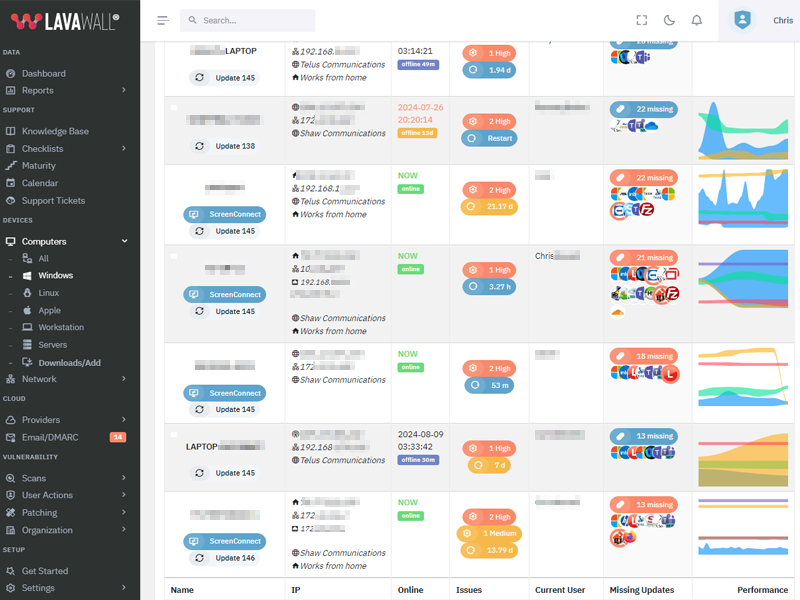
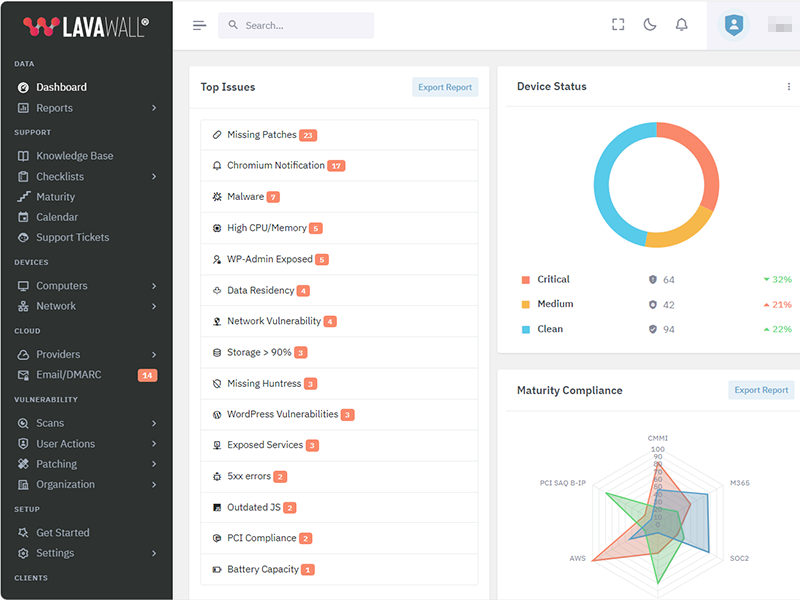
Get the IT stuff done that nobody wants to do.
Patch more applications, achieve compliance, and prevent problems while reducing stress with Lavawall®.
Security First
A security tool by security auditors. From Passkeys and Argon2i to source validation and MVSP principles, Lavawall® has you covered.
Constant Improvement
More features and more security added nearly every day.
More patchable programs added every week
While Ninite and other patching tools have had the same patch offerings for decades, we're monitoring stats to keep adding the most useful prorgams.
Details matter
From wrapping TLS communications in extra encryption and uninstalling remote support tools when they aren't used to detailed statistical analysis of system and network performance, Lavawall® goes in-depth.
Chromium extensions and Notification Validation
Lavawall® goes beyond patches and breach detection. We also monitor for risky Chromium extensions and allowed notifications that might be part of a phishing or ransomware attack.
Extended Cloud Security
Extend the security features of Cloudflare, Microsoft, Google, Sophos, and other cloud providers to create a Lavawall® of protection
Secure Remote Management
Even if you used breached remote management tools like ScreenConnect through Lavawall® when it was vulnerable, your computers stayed safe because we only install the agent when it needs to be used.
Integrations and automation
Easily deploy, monitor, and analyze security tools like Huntress, AutoElevate, and Sophos. Magically gain details from ZenDesk, ConnectWise, Datto, Panorama9, Microsoft, and Google.
Human and automated support
Get immediate fixes, user notifications, admin notifications -- and even security-certified human level 3 support when our advanced statistical analysis confirms a problem or anomaly.
| 2026‑10‑22 | 1.0.171.449 | |
| 2026‑09‑03 | 1.0.163.441 | |
| 2026‑08‑19 | 1.0.149.427 | |
| 2026‑08‑04 | 1.0.141.419 | |
| 2026‑07‑30 | 1.0.140.418 | Install mac remote shell script |
| 2026‑06‑19 | 1.0.131.409 | |
| 2026‑04‑02 | 1.0.115.393 | |
| 2026‑03‑12 | 1.0.113.391 | |
| 2026‑02‑12 | 1.0.104.382 | Processes and Packages improvements |
| 2026‑02‑10 | 1.0.100.378 | Processes and Packages improvements |
| 2025‑10‑02 | 1.0.82.360 | Processes and Packages improvements |
| 2025‑09‑23 | 1.0.79.357 | |
| 2025‑07‑16 | 1.0.42.320 | |
| 2025‑06‑13 | 1.0.14.292 | |
| 2025‑06‑03 | 1.0.2.280 | |
| 2025‑05‑12 | 0.12.77.264 | |
| 2025‑05‑07 | 0.12.76.263 | add tpm complience check and ensure consistent memory gathering in windows/linux/mac |
| 2025‑05‑05 | 0.12.74.261 | add tpm complience check and ensure consistent memory gathering in windows/linux/mac |
| 2025‑04‑23 | 0.12.68.255 | Uninstallation and update refinements |
| 2025‑04‑17 | 0.12.66.253 | Reliability improvements |
| 2025‑04‑15 | 0.12.65.252 | |
| 2025‑03‑27 | 0.12.64.251 | Add efficiency to package management system |
| 2025‑03‑10 | 0.12.60.247 | |
| 2025‑03‑04 | 0.12.58.245 | |
| 2025‑03‑03 | 0.12.57.244 | Add TPM complience check and ensure consistent memory gathering in windows/linux/mac |
| 2025‑02‑28 | 0.12.56.243 | Windows RAM reporting and persistent scalability framework enhancements |
| 2025‑02‑27 | 0.12.55.242 | Battery health refinements |
| 2025‑02‑26 | 0.12.54.241 | Add battery health statistics |
| 2025‑02‑26 | 0.12.53.240 | |
| 2025‑01‑29 | 0.12.35.222 | Risk score refinements |
| 2025‑01‑17 | 0.12.29.216 | Enhanced compliance and non-standard AV |
| 2025‑01‑13 | 0.12.28.215 | Improved process graphs |
| 2025‑01‑07 | 0.12.27.214 | Antivirus details, compliance |
| 2024‑12‑27 | 0.12.24.211 | |
| 2024‑12‑02 | 0.12.19.206 | |
| 2024‑11‑22 | 0.12.18.205 | |
| 2024‑10‑30 | 0.12.8.195 | Mac update refinements |
| 2024‑10‑25 | 0.12.3.190 | |
| 2024‑10‑21 | 0.12.0.187 | Macos implementaiton, linux and windows improvements |
| 2024‑10‑16 | 0.11.128.186 | Linux stats and system information improvements, improvements for application shutdown |
| 2024‑09‑12 | 0.11.113.171 | CPU Optimizations and Packages reliability improvements |
| 2024‑09‑05 | 0.11.106.164 | Phased deployment enhancements |
| 2024‑09‑04 | 0.11.103.161 | |
| 2024‑09‑02 | 0.11.102.160 | CPU Optimizations and Packages reliability improvements |
| 2024‑08‑30 | 0.11.99.157 | CPU Optimizations and Packages reliability improvements |
| 2024‑08‑29 | 0.11.98.156 | CPU utilization and console event optimization |
| 2024‑08‑28 | 0.11.97.155 | Reliability to detect unusual updates like redistributables. |
| 2024‑08‑27 | 0.11.96.154 | |
| 2024‑08‑26 | 0.11.95.153 | Faster response for reboot requests |
| 2024‑08‑20 | 0.11.92.150 | Additional package upgrade pre-requisites |
| 2024‑05‑20 | 253 | Added cleanup of old .json files during a re-install |
| 2024‑05‑13 | 252 | Added apt-get update to install |
| 2024‑05‑06 | 248 | Allow restart to use /var/run/reboot-required if needrestart is not installed |
| 2024‑04‑22 | 239 | Improve internal update and version tracking |
| 2024‑04‑15 | 235 | Add support for Yum packages |
| 2024‑04‑08 | 233 | Align patching with Windows patch reporting |
| 2024‑04‑02 | 228 | Add support for needrestart |
| 2024‑03‑04 | 224 | Schedule restarts |
| 2024‑03‑25 | 221 | Add support for apt packages |
| 2024‑03‑18 | 212 | Implement release management |
| 2024‑03‑11 | 202 | Add user login monitoring |
| 2024‑03‑04 | 189 | Enhance installation reliability |
| 2024‑02‑26 | 187 | Exapand triggers to identify if the instance needs to be restarted |
| 2024‑02‑19 | 146 | Improve compatibility for non-AWS instances |
| 2024‑02‑14 | 138 | Add self-uninstall capabilities |
| 2024‑02‑12 | 135 | Enhance scheduling flexibility |
| 2024‑02‑07 | 132 | Add kernel version tracking |
| 2024‑02‑05 | 124 | Add device hash to cryptographic self-update script validation |
| 2024‑01‑29 | 107 | Enhance encryption of patch data |
| 2024‑01‑22 | 98 | Improve how available storage is calculated |
| 2024‑01‑15 | 97 | Move initial tasks from installation file to sub scripts |
| 2024‑05‑21 | 91 | Improve multi-distribution compatibility |
| 2024‑05‑21 | 79 | Improve encryption reliability |
| 2023‑12‑11 | 68 | Enhance cryptographic validation of new scripts before updating |
| 2023‑11‑20 | 62 | Add inner layer of AES encryption in case TLS inspection doesn't allow for a secure connection |
| 2023‑11‑27 | 56 | Additional base cases for resiliancy |
| 2023‑11‑20 | 54 | Additional headers added to authentication process during installation. |
| 2023‑11‑20 | 53 | Enhanced key management |
| 2023‑11‑15 | 51 | Add insecure installation parameter to allow installation in environments with TLS inspection or other machine-in-the-middle situations. |
| 2023‑11‑06 | 42 | Enhance redundant encryption during installation. |
| 2023‑10‑30 | 33 | Improve install-over compatibility |
| 2023‑10‑23 | 18 | Add reboot configuration and scheduling |
| 2023‑10‑23 | 17 | Add self-updating functionality. |
| 2023‑10‑16 | 15 | Add Linux patching information for apt |
| 2023‑10‑09 | 14 | Collect system information |
| 2023‑10‑09 | 13 | Add Linux distribution information |
| 2023‑09‑30 | 12 | Add memory monitoring |
| 2023‑09‑30 | 10 | Add hardware information |
| 2023‑09‑23 | 9 | Add AWS information |
| 2023‑09‑23 | 8 | Add customized schedule capability for configuration updates |
| 2023‑09‑23 | 7 | Add support for package monitoring using package and dpkg logs |
| 2023‑09‑16 | 6 | Add storage data configuration gathering |
| 2023‑09‑16 | 5 | Add CPU information |
Lavawall® was built from the ground up with these concerns and the Minimum Viable Secure Product requirements in mind.
Some of the controls we implemented include:
- PassKeys as the preferred primary authentication at no additional cost
- Single Sign-on using modern, maintained, and industry-standard protocols for all customers at no additional cost
- Multi-Factor Authentication as a non-negotiable default
- Encrypting communications the same way as TLS again within the TLS tunnel, so we can allow TLS inspection without breaking like Huntress or disclosing security vulnerabilities to eavesdroppers.
- Encouraging external vulnerability reports and customer testing
- Passwords checked against popular disclosed passwords, hashed before they leave your computer, and then stored using Argon2id
- Not requiring the use of passwords at all. We consider them a temporary backup authentication in case you can't use passkeys or SSO.
Lavawall® databases and front-end systems are hosted with AWS in Montréal, Québec, Canada.
We send emails through AWS in Ireland and dedicated servers in Calgary, Alberta, Canada.
We send text messages for additional identity verification through Twilio in the United States.
We store executables and pass requests through Cloudflare at your nearest edge location.
We use Cloudflare for risk management, turnstile, and web application firewall services.
We use LeadPages for landing pages.
We use Google and Facebook for analytics on our public-facing pages, but they do not have access to the console.
We integrate with third-party tools, such as Microsoft, Google, Huntress, Screen Connect, Axcient, and Datto in their respective locations. However, you must initiate these integrations through single sign-on or by enabling them in your Lavawall® console.
Active security by design
Lavawall® is under active development with the latest release on
5+
Interfaces
150+
Monitored Applications
7+
System Metrics
Actively manage your IT with Lavawall®
Patching
Updates Beyond Windows
Lavawall® prevents the 80% of breaches and failed audits due to missing patches and updates.
You can reduce application patching delays from 67 days to nearly immediate with the 150+ applications that Lavawall® monitors and patches.
Patch release monitoring
Monitor everything without having to select packages or “managed applications”
Patch impact classification
Standard and optional Windows patches





























































































































































































































































































































The above listing includes products that Lavawall® monitors through public information and/or proprietary statistical analysis.
Although we do have a partner relationship with some of the listed products and companies, they do not necessarily endorse Lavawall® or have integrations with our systems.
Learn More
Flexible Term; Flexible Service
Flexibility for your dynamic business
You need to get your arms around compliance and security and don't want to get locked into “high watermark” monthly invoices or multi-year contracts.
Pay-as-you-need monthly pricing
DIY, full management, and coaching options
CMMI, PCI, SOC2, Canadian Cybersecurity, Minimum Viable Secure Product, and other compliance support
Choose the plan that's right for you
Simple pricing. No hidden fees. Advanced features for you business.
Month
Annual
Get 2 months free with Annual!
DIY
Security-focused RMM
C$3.25 /computer/Month
C$32.50 /computer/Year
-
1 computer
or 1 of the following cloud integrations:
AWS, Axcient, Connectwise, Datto, Google, Huntress, M365, Sophos Central integrations
(each integration counts as 1 computer) -
150+ application patches
-
30-day Logs
-
Security configuration monitoring
-
Anomaly detection
-
CMMI, MVSP, CyberCanda compliance
-
Lavawall® support
-
Sophos MDR: C$13.50/desktopSophos MDR: C$162/desktop
-
Huntress: C$5.40/deviceHuntress: C$64.80/device
-
Available white-label support for end users
-
Level 3+ IT support for IT
-
Weekly IT coaching sessions
Managed Security & Support
Unlimited end-user support
C$160 /user/Month
C$1,600 /user/Year
-
1 computer/user
Additional devices charged at DIY prices -
AWS, Axcient, Connectwise, Datto, Google, Huntress, M365, Sophos Central integrations
-
150+ application patches
-
90-day Logs
-
Security configuration monitoring
-
Anomaly detection
-
CMMI, MVSP, CyberCanda compliance
-
Lavawall® support
-
Sophos MDR Essentials
-
Huntress
-
White-label email and phone support for end users
-
Level 3+ IT support for IT
-
Weekly IT coaching sessions
-
Automatic discount and upgrade to Support & Coaching after 15 users
Support & Coaching
Improve your IT performance
$2,250 /Month
$22,500 /Year
-
25 computers included
Additional computers charged at DIY prices -
AWS, Axcient, Connectwise, Datto, Google, Huntress, M365, Sophos Central integrations
-
150+ application patches
-
90-day Logs
-
Security configuration monitoring
-
Anomaly detection
-
CMMI, MVSP, CyberCanda compliance
-
Lavawall®-only support
-
Sophos MDR Essentials
-
Huntress
-
White-label email and phone support for 15 users included Additional: C$150/user Additional: C$1,500/user
-
L3 IT support for IT
-
Weekly IT coaching sessions
Frequently Asked Questions
If you can not find answer to your question in our FAQ, you can always contact us or email us. We will answer you shortly!
General Questions
- Two years after a missing Plex Media Server led to the LastPass breach, the
Remote Monitorign and Management (RMM) tools availabel for Manged IT Service Providers (MSPs)
still didn't monitor for it.
Going through industry-specific applications, we noticed many were missing from the big RMM and patching providers. MSPs, insurance providers, and organizations that put their cleints at risk need to know about these risks, which lead to the largest number of critical audit findings and breaches - After 20 years of writing the same audit findings about system configurations, Payment Card Industry (PCI) compliance, and missing patches, our technical co-founder wanted to make it easier fo avoid these findings
- The existing risk visibility tools for insurance underwriters took a shallow look at Internet-facing risks. They -- along with all businesses -- need a deeper view of the threats that could actually lead to breaches.
- Domain risks
- Operating System (OS) patches
- Application patches
- Network vulnerabilities
- Cloud vulnerabilities
- OS configurations
- Axcient*
- Cloudflare
- Connectwise Screen Connect
- Datto RMM
- FreshDesk*
- Huntress
- Microsoft 365
- Panorama9
- ZenDesk
You can use your own logo for the console and notifications. You can also use a CNAME to automatically brand your console.
Note: you cannot currently re-proxy the CNAME to Lavawall® through Cloudflare.
Privacy & Security
However, we do allow passwords and use passwords as part of the zero-knowledge encryption for your clients' sensitive data, such as Bitlocker keys and Personally-Identifiable Information (PII).
These passwords use Argon2id slow hashes with individual salts and peppers.
We have added an additional secure tunnel that mimics the TLS process within the public TLS tunnel. This extra tunnel provides authentication and privacy for the workstations and the Lavawall® servers to prevent attacks such as the one that took down Solar Winds.
Remote access is not enabled for read-only and audit situations.
Get In Touch
Have a quick question and don't want to talk? Send us a quick note with the form below and we'll reply within one business day.
NW Calgary:
ThreeShield Information Security Corporation
600 Crowfoot Crescent N.W., Suite 340
Calgary, Alberta
T3G 0B4
SE Calgary:
ThreeShield Information Security Corporation
105, 11500 - 29th St. SE
Calgary, Alberta
T2Z 3W9
Canada
Phone
Sales Hours:
Support Hours:
On-Call Support Hours:
Questions about Lavawall®? Our contact form goes straight to a person on our team.
Contact us